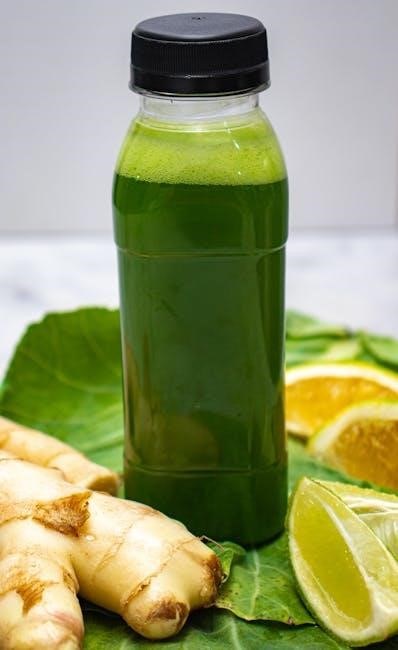
Juicing for Beginners offers a comprehensive starter guide, simplifying wellness with 100 recipes and nutritional advice – download the PDF for organized juicing!
What is Juicing and Why Do It?
Juicing is the process of extracting juice from fresh fruits and vegetables, separating it from the solid pulp. It’s a fantastic way to consume a concentrated dose of vitamins, minerals, and antioxidants directly into your bloodstream for rapid absorption.
Why embrace juicing? It allows you to ingest a greater quantity of produce than you might typically eat whole, supporting optimal health. A Juicing for Beginners PDF guide can streamline this process, offering recipes and insights.
With rising food costs and concerns about produce quality, juicing empowers you to maximize nutrition and control what you consume. It’s a proactive step towards a healthier lifestyle, easily incorporated into your daily routine with the help of resources like John Chatham’s book;
Benefits of Juicing: A Comprehensive Overview
Juicing delivers a concentrated burst of nutrients, supporting overall wellness. A Juicing for Beginners PDF guide highlights how this practice can boost energy levels and enhance vitality. It’s a powerful way to increase your intake of essential vitamins and minerals, promoting a stronger immune system.
Beyond basic nutrition, juicing can aid in weight loss by providing a low-calorie, nutrient-rich alternative to processed foods. Recipes within beginner resources often focus on maximizing these benefits.
Furthermore, juicing supports detoxification, helping the body eliminate toxins; Resources like John Chatham’s book offer safe and effective approaches, ensuring a positive experience. Embrace juicing for a revitalized and healthier you!
Getting Started with Juicing
A Juicing for Beginners PDF guide is your launchpad! Discover simple recipes, essential equipment, and produce insights for a seamless, healthy juicing journey.
Choosing the Right Juicer: Types and Comparison
Juicing for Beginners PDF resources emphasize selecting a juicer aligned with your needs. Two primary types dominate: centrifugal and masticating. Centrifugal juicers, often more affordable, utilize fast-spinning blades, ideal for harder produce but potentially sacrificing some nutrients due to heat generation.
Masticating (or slow) juicers, though pricier, gently crush produce, preserving more enzymes and yielding higher-quality juice. They excel with leafy greens and softer fruits. Consider your budget, preferred produce, and desired juice quality. A beginner’s PDF guide will often detail pros and cons, helping you navigate features like pulp ejection and ease of cleaning. Ultimately, the “best” juicer depends on your individual lifestyle and juicing goals.
Essential Equipment Beyond the Juicer
A Juicing for Beginners PDF will highlight that successful juicing extends beyond the machine itself. High-quality knives are crucial for efficient produce preparation. Durable cutting boards, preferably plastic to avoid flavor transfer, are also essential.
Glass jars with airtight lids are ideal for storing fresh juice, preserving nutrients and preventing oxidation. Strainers or nut milk bags can refine juice texture, removing excess pulp. Cleaning brushes specifically designed for juicers simplify maintenance. Finally, consider a produce wash to thoroughly clean fruits and vegetables. Investing in these tools streamlines the process and enhances your juicing experience, as detailed in beginner guides.
Understanding Produce: Organic vs. Conventional
A Juicing for Beginners PDF will often address the organic versus conventional produce debate. Organic produce, grown without synthetic pesticides and fertilizers, minimizes exposure to potentially harmful chemicals. However, it typically comes at a higher cost.
Conventional produce, while potentially containing pesticide residues, is generally more affordable and readily available. Thorough washing is crucial for both types. Prioritize buying from trusted sources and consider the Environmental Working Group’s “Dirty Dozen” list – highlighting produce with the highest pesticide levels. Ultimately, the best choice depends on your budget and priorities, but informed decisions are key to maximizing the health benefits of juicing.
Juicing Basics: Recipes & Techniques
A Juicing for Beginners PDF provides simple, quick recipes – most under 10 minutes – utilizing common ingredients for a seamless homemade juice journey!
Preparing Your Fruits and Vegetables
Juicing for Beginners emphasizes proper produce preparation for optimal juice extraction. Begin by thoroughly washing all fruits and vegetables, even those labeled organic, to remove dirt and potential residues. Cutting produce into appropriately sized pieces – roughly 1-2 inches – ensures your juicer can efficiently process them.
For harder vegetables like carrots or beets, smaller pieces are recommended. Peeling isn’t always necessary, but consider it for fruits with thick skins like oranges or pineapples. Remove large seeds and pits before juicing to prevent damage to your juicer.
A downloadable PDF guide can visually demonstrate these techniques. Remember, proper preparation maximizes juice yield and minimizes strain on your equipment, leading to a smoother, more enjoyable juicing experience. Prioritize freshness; use produce shortly after purchasing for the best nutritional value.
Basic Juicing Techniques for Maximum Yield
Juicing for Beginners highlights that alternating between soft and hard produce optimizes yield. Start with softer fruits and vegetables like cucumbers or apples, then transition to harder ones like carrots or beets. This prevents clogging and ensures consistent extraction.
Feed produce into the juicer at a steady, moderate pace – avoid overloading. If your juicer struggles, pause and reduce the amount being fed. Many juicers benefit from occasional pulsing to help push ingredients through.
A beginner’s PDF guide often includes diagrams illustrating these techniques. Remember, maximizing yield isn’t just about quantity; it’s about extracting the most nutrients. Experiment with different speeds and feeding techniques to find what works best for your specific juicer model.
Beginner-Friendly Juice Recipes (Green Juice)
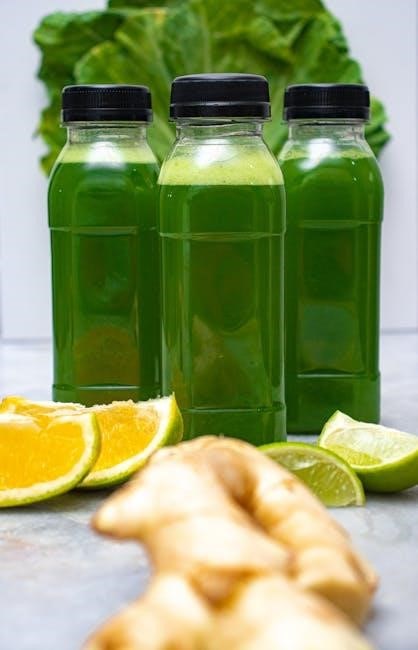
A Juicing for Beginners PDF often features a “Green Good Morning Juice” – a revitalizing blend perfect for starting your day. This recipe typically combines 15.4 oz of Green Apple, 6 oz of Kale, a small piece of Ginger (2.36 oz), and a squeeze of Lemon (2.4 oz).
For a milder green juice, increase the apple ratio. Kale can be substituted with spinach for a less intense flavor. Remember to wash all produce thoroughly before juicing.
Experiment with adding cucumber for extra hydration. These recipes are designed to be simple and quick, taking under 10 minutes to prepare. Adjust ingredient amounts to suit your taste preferences, and enjoy the benefits of a nutrient-packed green juice!
Beginner-Friendly Juice Recipes (Fruit Juice)
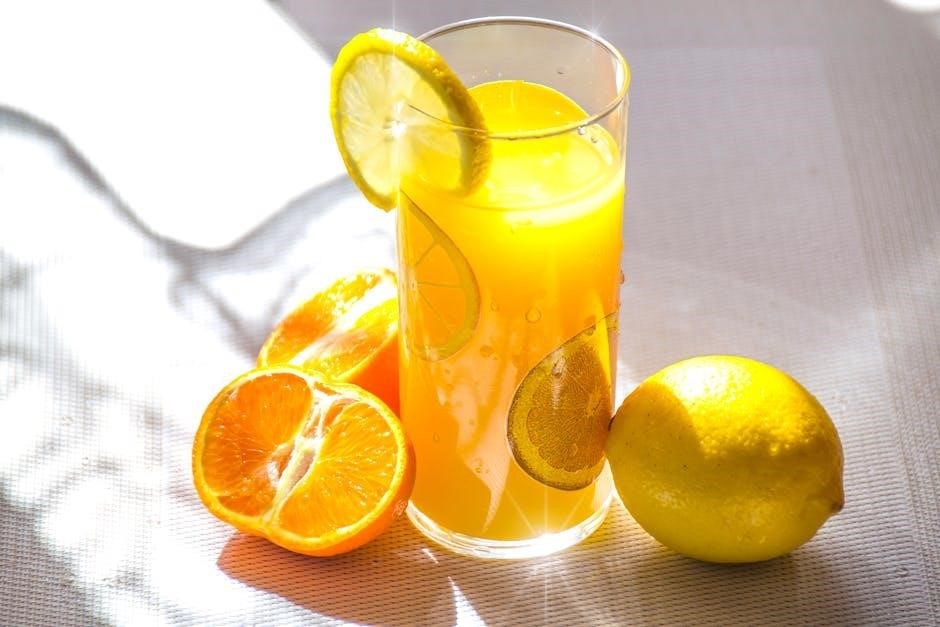
Many “Juicing for Beginners” PDFs highlight the simplicity of fruit juices. A classic beginner recipe utilizes Oranges (11.9 oz) and Pineapple (20.4 oz) for a sweet and refreshing blend. This combination provides a substantial yield – approximately 24 oz – though yields vary based on produce quality.
For a tangy twist, add a small amount of Lime (2.36 oz). Fruit juices are excellent for those new to juicing, offering a palatable introduction to the process. Remember to consume these juices in moderation due to their natural sugar content.
Experiment with different citrus fruits and tropical options to discover your favorite flavor combinations. These recipes are quick and easy, perfect for a healthy treat!
Beginner-Friendly Juice Recipes (Root Vegetable Juice)
While often overlooked, root vegetables make fantastic juices, as detailed in many “Juicing for Beginners” guides. Though specific root vegetable recipes weren’t directly provided, understanding yield helps. For example, a Cucumber yields around 20 oz of juice, offering a hydrating base.
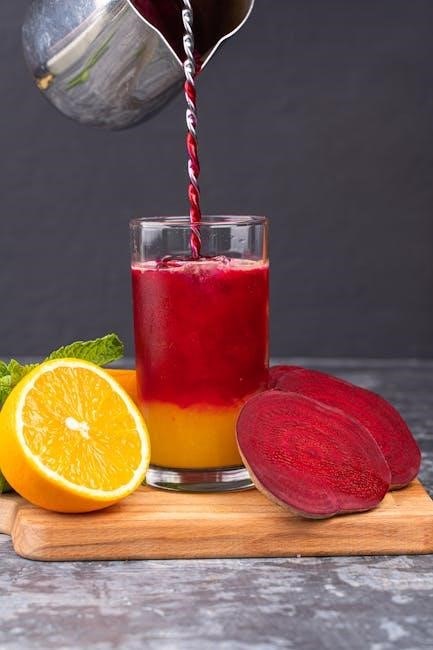
Combine Cucumber with a Green Apple (15.4 oz) for a slightly sweeter flavor. Root vegetables like beets and carrots (not mentioned in the provided text, but common) add earthy sweetness and vibrant color.
Experimenting with small amounts of Ginger (1.02 oz) can enhance the flavor profile. Root vegetable juices are nutrient-dense and provide a sustained energy boost. Remember to adjust quantities to your taste!
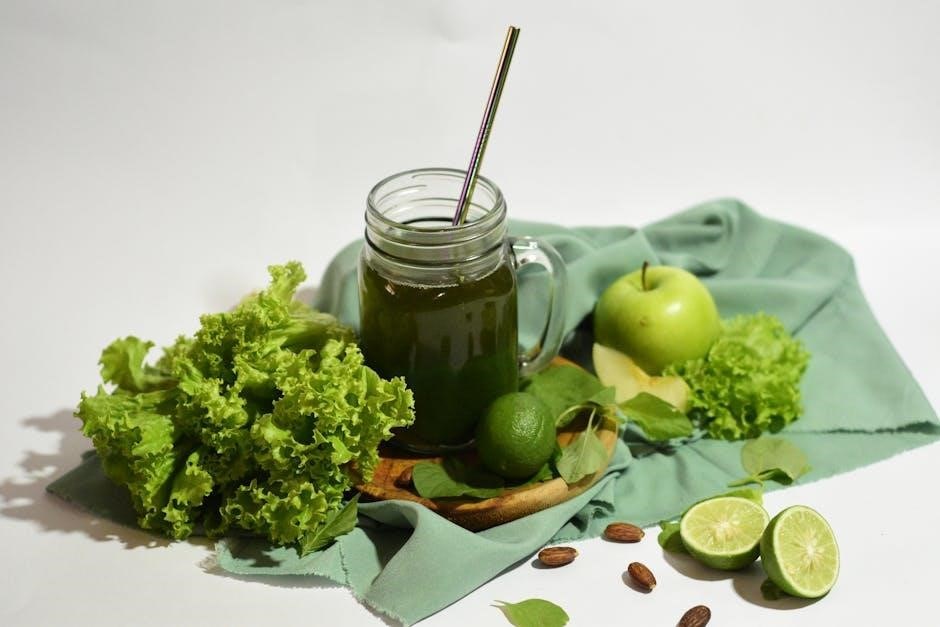
Juice Yields & Common Produce
Juicing yields vary; Pineapple gives 20.4 oz, Oranges 11.9 oz, Lime 2.36 oz, and Cucumber 20 oz – find detailed guides in a PDF!
Juice Yields from Common Fruits (Pineapple, Oranges, Lime)
Understanding juice yields is crucial for beginners, allowing for efficient produce purchasing and recipe scaling. Pineapple, a popular choice, typically yields around 20.4 ounces of juice per fruit, offering a sweet and tropical base for blends. Oranges, known for their Vitamin C, provide approximately 11.9 ounces of juice, perfect for a refreshing citrus boost.
Don’t underestimate the power of smaller fruits! Limes, while smaller, contribute a zesty tang and yield about 2.36 ounces of juice. These figures are estimates, and actual yields can vary based on fruit size, ripeness, and the efficiency of your juicer.
For a comprehensive guide, including detailed charts and tips on maximizing yield, consider downloading a juicing for beginners PDF – it’s a valuable resource!
Juice Yields from Common Vegetables (Cucumber, Green Apple, Kale, Lemon)
Vegetables form the foundation of many healthy juices, and knowing their yields helps optimize your juicing routine. Cucumbers are incredibly hydrating and yield around 20 ounces of juice, making them a fantastic base. Green apples contribute a subtle sweetness and approximately 15.4 ounces of juice per apple.
For a nutritional powerhouse, kale provides roughly 6 ounces of juice, though its yield can vary based on leaf density. Finally, lemons, like limes, offer a zesty kick and yield about 2.4 ounces of juice.
Remember, these are averages! A juicing for beginners PDF can offer more detailed charts and guidance on maximizing yields from various produce.
Juicing for Specific Goals
Explore recipes designed for weight loss, detoxification, and increased energy! A juicing for beginners PDF provides tailored plans to achieve your wellness objectives.
Juicing for Weight Loss: Recipes and Tips
Juicing can be a powerful tool for weight management, offering a low-calorie way to consume essential nutrients. A juicing for beginners PDF often includes specific recipes designed to support weight loss goals, focusing on ingredients that promote fullness and boost metabolism.
These recipes typically emphasize leafy greens, fiber-rich vegetables, and fruits with a lower glycemic index. Consider incorporating ingredients like cucumber, kale, green apple, and lemon into your juices. Remember, juicing should complement a balanced diet and regular exercise.
The PDF guide will likely provide tips on portion control, timing your juices, and avoiding added sugars. Simple, quick recipes – often taking under 10 minutes to prepare – are ideal for busy lifestyles. Embrace this journey towards a healthier you!
Juicing for Detoxification: Safe and Effective Approaches
A juicing for beginners PDF will emphasize that true detoxification is best supported by the body’s natural processes, and juicing can aid this. Focus on juices rich in chlorophyll and antioxidants, like those featuring kale and green apple, to support liver function.
However, the guide will likely caution against extreme “detox” cleanses. Safe approaches involve incorporating juices as part of a balanced diet, not replacing whole foods entirely. Prioritize hydration with water alongside your juices.
Avoid excessive fruit juice, as the sugar content can hinder detoxification. The PDF should highlight the importance of listening to your body and consulting a healthcare professional before starting any new dietary regimen.
Juicing for Increased Energy Levels
A juicing for beginners PDF will likely highlight how readily absorbed nutrients from juice can provide a quick energy boost, unlike digesting whole foods. Recipes emphasizing greens like kale, combined with fruits like oranges or pineapple, offer vitamins and hydration.
The guide will likely explain that consistent juicing, as part of a healthy lifestyle, can combat fatigue by providing essential vitamins and minerals. It will also stress the importance of avoiding sugar crashes by balancing fruit with vegetables.
Furthermore, the PDF should advise incorporating juices strategically – for example, a morning juice for sustained energy, rather than relying on them as a sole energy source throughout the day.

Dealing with Juice Pulp
A juicing for beginners PDF will detail creative uses for leftover pulp – don’t trash it! Recipes beyond discarding pulp are readily available.
Creative Ways to Use Leftover Juice Pulp
Don’t discard the valuable fiber left after juicing! A comprehensive juicing for beginners PDF guide will highlight numerous ways to repurpose juice pulp, moving beyond simply throwing it away. Consider incorporating it into baked goods like muffins, breads, or even crackers, adding texture and nutrients.
Pulp can also be a fantastic addition to soups and stews, thickening them naturally and boosting their nutritional profile. For vegetable pulp, try adding it to veggie burgers or meatballs as a binder and flavor enhancer. Fruit pulp works wonderfully in smoothies or homemade fruit leather.
Experiment with dehydrating the pulp to create vegetable powders for seasoning, or even using it as compost for your garden. A beginner’s guide will unlock a world of possibilities, transforming what was once waste into a resourceful ingredient!
Juice Pulp Recipes: Beyond the Trash
A juicing for beginners PDF often includes recipes utilizing leftover pulp, demonstrating its versatility. Try Carrot Pulp Fritters: combine carrot pulp with flour, egg, and spices, then fry for a savory snack. Apple pulp transforms into delicious Apple Pulp Muffins – a healthy and flavorful treat!
For a savory option, consider Ginger-Kale Pulp Veggie Burgers, blending kale and ginger pulp with beans and seasonings. Dehydrated pulp can become a flavorful seasoning blend. Even simple additions like pulp to soups or stews enhance texture and nutrition.
These recipes minimize waste and maximize the benefits of your juicing routine. Explore a beginner’s guide for detailed instructions and creative inspiration, turning what was once discarded into culinary delights!
Juicing Safety and Considerations
A juicing for beginners PDF highlights potential side effects and precautions, ensuring safe detoxification and a positive experience with your new health journey.
Potential Side Effects of Juicing
Embarking on a juicing journey, as detailed in a comprehensive juicing for beginners PDF, can sometimes bring about temporary side effects. These are often a sign your body is detoxifying and adjusting to the increased nutrient intake. Common experiences include digestive upset, such as bloating, gas, or diarrhea, particularly when starting with high-fiber green juices.
Headaches can occur as toxins are released, and fatigue is possible as your body redirects energy towards cleansing. Some individuals may experience skin breakouts as impurities are eliminated. It’s crucial to listen to your body, stay hydrated, and gradually increase juice consumption to minimize these effects. A beginner’s guide PDF will emphasize starting slowly and choosing balanced recipes.
If side effects persist or become severe, consulting a healthcare professional is always recommended.
Important Precautions and Contraindications
A juicing for beginners PDF will highlight crucial precautions. Individuals with kidney problems should exercise caution due to the high oxalate content in some juices. Diabetics need to monitor blood sugar levels closely, as fruit juices can cause spikes. Those on medication should consult their doctor, as juicing can affect drug absorption.
Pregnant or breastfeeding women should seek medical advice before juicing. Avoid juicing if you have a compromised immune system. It’s vital to thoroughly wash all produce to minimize pesticide exposure. A beginner’s guide PDF stresses the importance of using fresh, high-quality ingredients.
Always consume juice immediately or store it properly to prevent bacterial growth. Moderation is key; excessive juicing can lead to nutrient imbalances.
Resources and Further Learning
Explore Juicing for Beginners by John Chatham, a vital starter guide! Download a juicing for beginners PDF for organized recipes and tips today.
Recommended Books: “Juicing for Beginners” by John Chatham
John Chatham’s Juicing for Beginners is an exceptional resource for those embarking on their juicing journey. This book simplifies the path to wellness, offering over 100 delicious and accessible recipes designed for newcomers.
Beyond the recipes, it provides a wealth of nutritional information, empowering you to understand the benefits of each juice. The book is structured to be a complete guide, covering everything from selecting the right produce to mastering basic juicing techniques.
For convenient access and portability, consider downloading a juicing for beginners PDF version to have these valuable recipes and insights readily available wherever you go. It’s a fantastic companion for a healthier lifestyle!
Online Resources and Communities
Embarking on a juicing journey is even more rewarding with access to vibrant online communities and resources! Numerous websites and forums offer support, recipe sharing, and expert advice for juicing for beginners.
These platforms are excellent for troubleshooting, discovering new flavor combinations, and staying motivated. Many sites also provide downloadable resources, including a convenient juicing for beginners PDF guide, consolidating essential information in one place.
Explore online groups to connect with fellow juicers, exchange tips, and find inspiration. Don’t hesitate to leverage these digital tools to enhance your experience and maximize the benefits of juicing!
Downloading a Juicing for Beginners PDF Guide
A juicing for beginners PDF guide is an invaluable resource for anyone starting their health journey! These downloadable guides consolidate essential information, offering a convenient and accessible way to learn the fundamentals of juicing.
Typically, these PDFs include beginner-friendly recipes, detailed equipment guides, produce preparation tips, and insights into the health benefits of juicing. They often feature sections on juice yields from common fruits and vegetables, streamlining your planning.
Having a juicing for beginners PDF readily available allows for offline access to knowledge, making it perfect for quick reference during meal prep or grocery shopping. It’s a fantastic way to stay organized and informed!
Maintaining a Juicing Routine
Successfully integrate juicing into daily life for optimal health; a juicing for beginners PDF can help establish long-term strategies and consistent habits!
Incorporating Juicing into Your Daily Lifestyle
Juicing doesn’t require a complete overhaul of your diet, but rather a mindful addition. Begin by replacing one less-healthy beverage daily with a fresh juice, perhaps as a morning boost or afternoon pick-me-up.
A juicing for beginners PDF guide can be invaluable here, offering structured plans and recipe ideas to prevent monotony. Consider prepping produce in advance to streamline the process, saving valuable time during busy weekdays.
Experiment with different juice combinations to discover flavors you genuinely enjoy, ensuring sustainability. Don’t view juicing as a restrictive diet, but as a way to supplement your existing healthy eating habits. Consistency is key – even small, regular steps contribute to long-term wellness!
Long-Term Juicing Strategies for Optimal Health
Sustaining a juicing routine requires planning beyond initial enthusiasm. Rotate your juice recipes frequently to ensure a diverse nutrient intake, avoiding potential sensitivities. A juicing for beginners PDF can provide a rotating recipe schedule.
Focus on seasonal produce for peak flavor and nutritional value, and consider growing some of your own ingredients. Remember that juicing is most effective when combined with a balanced diet and regular exercise.
Listen to your body and adjust your juicing habits accordingly. Don’t be afraid to experiment and find what works best for you. Prioritize quality ingredients and consistent practice for lasting health benefits.